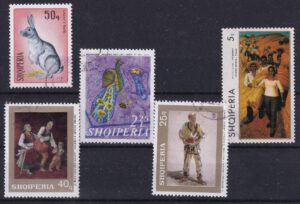
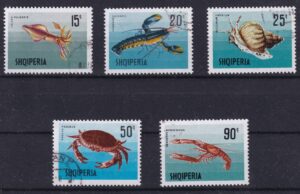
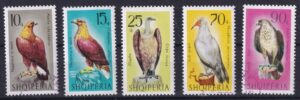
Albanien
The History of Postage Stamps in Albania
The history of postage stamps in Albania reflects the country’s journey through political change, cultural identity, and national development. Albania issued its first postage stamps on March 5, 1913, following its declaration of independence from the Ottoman Empire in 1912. These initial stamps featured the double-headed eagle, a symbol of Albanian sovereignty, overprinted on Ottoman stamps.
During the early years, Albania’s postal service faced challenges due to political instability and foreign occupations. In 1914, new stamps were issued under Prince Wilhelm of Wied, but with the outbreak of World War I, Albania’s postal system was disrupted. Various foreign powers, including Austria-Hungary, Italy, and Greece, introduced their own postal issues during their occupations.
In 1920, after Albania regained control of its postal system, the government began issuing stamps reflecting national themes, including cultural heritage, landscapes, and historical figures. The reign of King Zog (1928–1939) saw the introduction of visually impressive stamps celebrating modernization efforts and Albania’s monarchy.
World War II brought another period of foreign postal influence, with Italian and later German occupation forces issuing stamps. After the war, in 1946, Albania became a socialist state under Enver Hoxha, and its stamps often reflected political propaganda, celebrating communist ideals, industrial progress, and international solidarity.
Following the collapse of the communist regime in 1991, Albania’s stamps began to showcase a wider range of themes, including historical anniversaries, flora and fauna, and global cultural events. Today, Albanian postage stamps are recognized for their artistic designs and historical significance, making them popular among collectors worldwide.
The evolution of Albania’s stamps provides a fascinating lens through which to explore the nation’s history, culture, and resilience.
Viser 5 resultaterSorteret efter seneste